
Your never ending news update about your Alma Mater - MSU
Wednesday, February 29, 2012


Saturday, February 25, 2012
Philippine Navy and Philippine Coast Guard will conduct joint patrol in West mandated under the newly-created National Coast Watch System (NCWS) Philippine Sea as

Addressing the PCG graduating class of Advance Boarding Officers' Course (ABOC) conducted by the United States Coast Guard (USCG) Mobile Training Team held at the PCG headquarters last week, newly-named PCG chief of staff Commodore Aaron T. Reconquista said, of late, the PCG has been mandated with a leading role in the West Philippine Sea in terms of enforcement of national laws particularly relative to customs, immigration and quarantine (CIQ).

.jpg)
He extended the warm felicitations and words of thanks of the whole PCG headed by its commandant Vice Admiral Edmund C. Tan to US embassy deputy economic counselor Mr. Brent Christensen, US charge' d Affaires Ms. Leslie Basset, Export control and Boarding Security (EXBS)regional advisor Mike Mcnamara, US naval attache to the Philippines Capt. Jack Sotherland, and the entire USCG Mobile training team for the time they shared with the PCG, who benefited from the training course.
The conduct of the ABOC is really quite timely, said Reconquista. "Today's terrorists are not particularly concern about converts, and rather than wanting a seat at the table, they want to destroy the table and everyone sitting on it,!" stressed the PCG chief of staff.

Reconquista, an alumnus of Philippine Military Academy (PMA) and the United States Coast Guard Academy (USCGA), disclosed that the 2nd USCG cutter will be handed over to the Philippine Navy soon. Expressing excitement, he told US brass present at the rites, "perhaps through your representation, the 3rd USCG cutter would be for the PCG, as the trend in maritime law enforcement is shifting to law enforcer operators like the Coast Guard, in contrast to the aggressive nature of the 'gray ships."
President Benigno Aquino III created the National Coast Watch System (NCWS) to expand the country's naval and maritime security operations to preserve the Philippine territory, protect its people and resources from maritime threats, through Executive Order No. 57 that has made the NCWS the 'central inter-agency mechanism' for a more coordinated approach on maritime issues, and security operations, to enhance governance of the country's maritime domain.'

China Order the Philippines over Spratly
Former Chinese Ambassador to the Philippines Wang Yingfan warned that dragging the United States in the disputed West Philippine Sea (South China Sea) would be unacceptable to China and Beijing "certainly would react" if that happened.
"We could forge good neighborly relations and work out something that's beneficial and acceptable to both sides… You are happy and we are happy. Maybe, you're half-happy and we're half-happy, but it's acceptable to both sides," Wang said in a media forum on Wednesday organized by the Chinese Embassy.
Wang ignored the previous incidents of poaching and firing of Chinese Naval Force to the Filipino fishermen fishing in the Sea of Palawan.
Wang, who served in Manila from 1988 to 1990, said there was nothing wrong with the Philippines acquiring used US warships for defense purposes and that "any nation must do something (to improve) their own national defense."
"It's understandable. No problem," he said. "I know your Navy is very much backward in equipment. If you buy warships from the United States, I would understand."
But Wang, who said he still advised his government on regional issues despite his retirement, asserted that allowing the United States to meddle in the six-nation Spratly Island dispute was another story.
More complicated
"If it really happens that the United States and your country would talk about the South China Sea and how you should work together, I think that would be something which cannot be accepted by the Chinese," he said.
"If (the Americans) involve themselves in the territorial dispute, there will be problems with China. If that happened, the Chinese government certainly would react," he added.
That is why it would be "wise for the nations concerned in this region, including the Philippines, not to introduce Americans into the disputed waters," Wang said.
Six claimants
"That would make the issue more complicated and more difficult to settle among ourselves," he said.
The Spratlys are a chain of up to 190 isles, reefs, coral outcrops and banks believed to be sitting atop large deposits of oil and natural gas. A Chinese report quoted by US authorities estimates there are 225 billion barrels of oil in the area.
The isles and their waters are claimed wholly or in part by China, Taiwan, the Philippines, Vietnam, Malaysia and Brunei.
President Benigno Aquino III has said the gas deposits in the disputed territory are so enormous that they would dwarf the Malampaya oil and gas fields.
Wang Yingfan and another retired Chinese diplomat, Wang Chungui, who was ambassador to Manila from 2000 to 2004, are in the Philippines on a weeklong goodwill visit as part of the two countries' friendly exchanges, the embassy said.
'Deng Xiaoping solution'
Wang Yingfan pushed for the so-called "Deng Xiaoping solution" to the dispute—setting aside the territorial quarrel in favor of joint exploration and development.
Xiaoping solution is unfavorable and unacceptable to the Philippines as the whole Spratly's Archipelago is under the territory of the old Sultanate State of Sulu during the 1400 years. The Chinese invasion to the Philippines territory in Spratly wouldn't mean that they would have the rights over the wealth in the Spratly but just a forever dream as the Philippines will never surrender to China's power.
The late Deng, who led China from 1978 to 1992, steered the world's most populous state toward a market economy in the 1980s.
Wang Yingfan stressed "it is the time for cooperation, not confrontation, not fighting."
"I talked with some important people in your government that we should work hard to find ways that are acceptable to both sides, that we must work hard to prepare the ground so that we could share the resources together," he added.
"The response was very encouraging. They said they would consider this kind of thinking. So with patience, with goodwill and with hard work, we could find a way out that's agreeable and acceptable to both sides."
'China's Solution will come but not the UNCLOS'
Instead of wasting time talking about the Spratlys dispute, Wang said it would be better if Filipinos "spend your energy on economic development."
He said "it would take some time before we could find a solution (to the dispute)" but he was "optimistic that that will come."
Foreign Secretary Albert del Rosario has said a "rules-based" approach based on international law is the key to settling the dispute and that the Philippines expects nothing less from the other Spratlys claimants.
Following a recent meeting between the Philippines and China in Beijing, the Department of Foreign Affairs said the two sides had agreed to promote bilateral relations, such as on energy, science and technology, disaster mitigation, law enforcement and maritime cooperation.
The Chinese foreign ministry has said both countries have agreed not to let their quarrel over the Spratlys "affect the broader picture of friendship and cooperation" between them.
China had warn the Philippines several times that the Philippines would pay the price after Philippine Navy catch the Chinese poacher who is illegally killing green turtles in the West Philippines sea, recently Chinese government mouthpiece even call for the China government to sanction the Philippines by economic disruption and even fired several Filipino fishermen in the Philippine waters during the last year.
China's belligerent behavior towards the Philippines have recently slow down after the USA pronounced its full support to the Philippines if there is any invasion from external force to the Philippine territory.
Though invasion happened as the china controlled few islands and shoal near the Palawan Island under Palawan jurisdiction; still the Philippines failed to drive away the current illegal occupation of china in around Sabina shoal.
China loosen its tight grip over the Spratlys archipelago after US intervene of its aggression in the 1400 year old territory of the Sultanate State of Sulu which is the Spratly Archipelago.
China won't give up its territorial claim in the West Philippine Seas

“The Chinese will not agree, no leaders will agree to do that,” said Wang Yingfan, who, together with Wang Chungui, met with the local press in a roundtable discussion Wednesday night at a hotel in Manila.
A former vice minister of China’s Ministry of Foreign Affairs, Wang Yingfan served as ambassador to Manila from 1985 to 1990. He was also appointed as Permanent Representative of China to the United Nations from 2000 to 2003 and Vice-Chairman of the Foreign Affairs Committee of the Chinese National People’s Congress from 2003 to 2008.
Wang Chungui was the Chinese envoy to the Philippines from 2000 to 2004. His 30-year diplomatic career has been concentrated on Asia.
The visit of the Chinese diplomats signals the start of what has been designated by the leaders of the two countries as “Years of Friendly Exchanges between China and the Philippines” from 2012 to 2013.
According to Wang Yingfan, between China, the Philippines, and other claimant countries, it could be sometime before a solution on the West Philippines Sea is reached.
However, when that day will come, he is not that optimistic the sovereignty issue would be resolved.
By:
(Roy C. Mabasa)
Friday, February 24, 2012
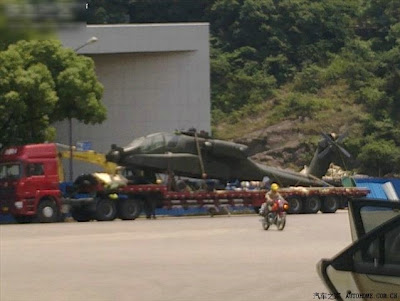
US appache Helicopter left in Pakistan found in China
This was sold by Pakistan to China.. after US special forces left this during the Osama bin Laden in a covert raid last May in the garrison town of Abbottabad, Pakistan .. China for sure will copy the design and most possibly the top secret military equipment inside


Tuesday, February 21, 2012
Philippines Tops As Investment Site
JETRO Competitiveness Survey In Asia
February 13, 2012, 12:46am
 MANILA, Philippines — The Philippines has emerged as the most competitive country among seven Asian economies as an investment destination and doing business whether in manufacturing or services sectors, the latest survey conducted by the Japan External Trade Organization (JETRO) revealed.
Trade and Industry Undersecretary Cristino L. Panlilio said that JETRO came out with this Philippine Competitiveness survey by comparing the Philippines with six other Asian countries wherein the Philippines bested China, Malaysia, Thailand, India, Vietnam, Indonesia and Myanmar in most categories. Competitiveness indicators included in the survey are financial costs, sufficient labor supply and reasonable salary (for manufacturing and non-manufacturing personnel).
The survey was conducted by JETRO on Japanese-affiliated Firms in Asia and Oceania for the period August-September 2011.
“We are the cheapest in almost all categories of doing business,” Panlilio said.
The Philippines garnered favorable ratings in terms of competitiveness advantage on business environment in comparison to other Asian countries, the report said.
Based on the survey results, the Philippines has the cheapest rates when it comes to labor, rentals and land prices. The Philippines also has the least problem on the competency of its labor pool.
In terms of sufficiency of labor supply, the Philippines emerged to have the most plentiful number of workers and second to Malaysia when it comes to the availability of executives.
“In terms of employment retention, we have the best loyalty record. In terms of problems of workers competency, we have the least problem,” Panlilio said. .
“The implication of this project is that even in Asia, we are now very competitive. In fact, we are the most competitive when it comes to those factors of business or investment decision making,” Panlilio said.
Specifically, the JETRO survey showed that when it comes to problems on increasing financial costs in the Philippines, the country had the lowest percentage rating of 4.6 percent while China had 64.1 percent. Comparatively, ratings of Indonesia, Vietnam, India, Thailand and Malaysia ranged from 51.9 to 61.5 percent.
In terms of problems in shortage of land/offices, rising land prices/rental, the survey results showed this is not a major problem in the Philippines considering that the 5.8 percent rating is way far lower than the 32 percent rating of India, which is the highest. Ratings of Malaysia, Thailand, Indonesia and Vietnam ranged from 9.8 percent-18 percent for this particular indicator.
On problems in skyrockettng payroll costs, again the Philippines had the lowest rating of 18.2 percent with Vietnam having the highest 61.3 percent. Malaysia was second lowest with 27.5 percent while ratings of Indonesia, India and Thailand ranged from 40.8 to 48.1 percent.
On sufficiency of labor supply, the survey showed the Philippines had the lowest rating of 3.2 percent followed by India, 4.2 percent and Indonesia, 4.4 percent respectively, in terms of difficulty in recruiting general staff.
This particular rating means there is a large pool of general staff which MNCs can recruit or hire. Ratings of China, Thailand, Malaysia and Vietnam ranged from 28.6 percent to 36.7 percent with Vietnam having the highest rating when it comes to difficulty in recruiting general staff.
On the difficulty in recruiting executives, Malaysia had the lowest rating of 37.9 percent followed by the Philippines 39 percent. Myanmar had the highest rating of 64.3 percent while the ratings of Thailand, China, Indonesia, India and Vietnam ranged from 40 to 52.8 percent.
Another indicator is low rate of worker’s employment retention where the Philippines had a rating of 30.6 percent, the lowest among ratings of other Asian countries. Vietnam had 48.7 percent rating so far the highest, while ratings of Thailand, China, India and Malaysia ranged from 33.6 percent to 42.5 percent.
The Philippines boasts of highly competent and English-proficient labor force. Thus the rating of 37.9 percent the lowest which means our country does not have a major problem when it comes to worker’s competency compared to Thailand, Indonesia, Malaysia, India, China, Vietnam and Myanmar, with ratings from 40.9 percent to 56.3 percent with Myanmar having their highest percentage when it comes to problems on worker’s competency.
For the manufacturing sector only, when it comes to difficulty in quality control Philippine ratings of 26.7 percent, the lowest so far among other Asian countries in the report, proved that manufacturing firms had minimal problems on quality control compared to India with the highest rating of 45.5 percent. Indonesia, Vietnam, Thailand, Malaysia and China with rating of 28.7 to 43.4 percent.
Reasonable salary, another competitiveness indicator, showed that the Philippines had 5.3 percent rating salary base-up rate for 2011-2012. Malaysia followed with 4.5 percent. Vietnam had the highest rating of 17.1 percent for said indicator while Thailand’s rating was third from the lowest at 6 percent, followed by Indonesia, 9 percent; China, 11.4 percent and India,, 12.8 percent
For the annual salary (including bonuses, allowances, benefits like SSS, Pag-Ibig etc) of the manufacturing staff, the Philippines ranked third from the lowest giving an annual salary of $4,048.
The lowest was Vietnam with annual salary of $2,196 followed by Indonesia, $3,980. Annual salary ranges of India, Thailand, China and Malaysia were from $4,495 to $6,340 with Malaysia giving the highest annual salary for its manufacturing staff.
0n annual salary (including bonuses, allowances, SSS, etc) for manufacturing engineers, again, Vietnam’s annual salary of $4,793 was the lowest, followed by the Philippines, $6,494.
Malaysia had the highest annual salary for manufacturing engineers at $16,092 while annual salaries of Indonesia, China, India, and Thailand ranged from $9,937 to $11,464.
On annual salary (including onuses, allowances, SSS, Etc) for mfg managers, still Vietnam’s annual salary of $11,526 was the lowest annual salary of $5,199 again followed by Indonesia and the Philippines at $6,852 and $7,324, respectively. Malaysia had the highest annual salary for non-mfg staff at $14,554 while annual salaries of India, Thailand and China ranged from 10,088 to $12,334.
On annual salary (including bonuses, allowances, SSS, etc) for non-manufacturing manages, again Vietnam continued to be giving the lowest annual salary of $14,977 for non-mfg managers, followed by the Philippines and Indonesia at $19,187 and $23,068, respectively.
Consistent for annual salaries, all categories, Malaysia had the highest annual salary at $35,117 while annual salaries of India, Thailand and China ranged from $25,179 to $27,610.(Bernie Cahiles-Magkilat)
February 13, 2012, 12:46am
 MANILA, Philippines — The Philippines has emerged as the most competitive country among seven Asian economies as an investment destination and doing business whether in manufacturing or services sectors, the latest survey conducted by the Japan External Trade Organization (JETRO) revealed.
Trade and Industry Undersecretary Cristino L. Panlilio said that JETRO came out with this Philippine Competitiveness survey by comparing the Philippines with six other Asian countries wherein the Philippines bested China, Malaysia, Thailand, India, Vietnam, Indonesia and Myanmar in most categories. Competitiveness indicators included in the survey are financial costs, sufficient labor supply and reasonable salary (for manufacturing and non-manufacturing personnel).
The survey was conducted by JETRO on Japanese-affiliated Firms in Asia and Oceania for the period August-September 2011.
“We are the cheapest in almost all categories of doing business,” Panlilio said.
The Philippines garnered favorable ratings in terms of competitiveness advantage on business environment in comparison to other Asian countries, the report said.
Based on the survey results, the Philippines has the cheapest rates when it comes to labor, rentals and land prices. The Philippines also has the least problem on the competency of its labor pool.
In terms of sufficiency of labor supply, the Philippines emerged to have the most plentiful number of workers and second to Malaysia when it comes to the availability of executives.
“In terms of employment retention, we have the best loyalty record. In terms of problems of workers competency, we have the least problem,” Panlilio said. .
“The implication of this project is that even in Asia, we are now very competitive. In fact, we are the most competitive when it comes to those factors of business or investment decision making,” Panlilio said.
Specifically, the JETRO survey showed that when it comes to problems on increasing financial costs in the Philippines, the country had the lowest percentage rating of 4.6 percent while China had 64.1 percent. Comparatively, ratings of Indonesia, Vietnam, India, Thailand and Malaysia ranged from 51.9 to 61.5 percent.
In terms of problems in shortage of land/offices, rising land prices/rental, the survey results showed this is not a major problem in the Philippines considering that the 5.8 percent rating is way far lower than the 32 percent rating of India, which is the highest. Ratings of Malaysia, Thailand, Indonesia and Vietnam ranged from 9.8 percent-18 percent for this particular indicator.
On problems in skyrockettng payroll costs, again the Philippines had the lowest rating of 18.2 percent with Vietnam having the highest 61.3 percent. Malaysia was second lowest with 27.5 percent while ratings of Indonesia, India and Thailand ranged from 40.8 to 48.1 percent.
On sufficiency of labor supply, the survey showed the Philippines had the lowest rating of 3.2 percent followed by India, 4.2 percent and Indonesia, 4.4 percent respectively, in terms of difficulty in recruiting general staff.
This particular rating means there is a large pool of general staff which MNCs can recruit or hire. Ratings of China, Thailand, Malaysia and Vietnam ranged from 28.6 percent to 36.7 percent with Vietnam having the highest rating when it comes to difficulty in recruiting general staff.
On the difficulty in recruiting executives, Malaysia had the lowest rating of 37.9 percent followed by the Philippines 39 percent. Myanmar had the highest rating of 64.3 percent while the ratings of Thailand, China, Indonesia, India and Vietnam ranged from 40 to 52.8 percent.
Another indicator is low rate of worker’s employment retention where the Philippines had a rating of 30.6 percent, the lowest among ratings of other Asian countries. Vietnam had 48.7 percent rating so far the highest, while ratings of Thailand, China, India and Malaysia ranged from 33.6 percent to 42.5 percent.
The Philippines boasts of highly competent and English-proficient labor force. Thus the rating of 37.9 percent the lowest which means our country does not have a major problem when it comes to worker’s competency compared to Thailand, Indonesia, Malaysia, India, China, Vietnam and Myanmar, with ratings from 40.9 percent to 56.3 percent with Myanmar having their highest percentage when it comes to problems on worker’s competency.
For the manufacturing sector only, when it comes to difficulty in quality control Philippine ratings of 26.7 percent, the lowest so far among other Asian countries in the report, proved that manufacturing firms had minimal problems on quality control compared to India with the highest rating of 45.5 percent. Indonesia, Vietnam, Thailand, Malaysia and China with rating of 28.7 to 43.4 percent.
Reasonable salary, another competitiveness indicator, showed that the Philippines had 5.3 percent rating salary base-up rate for 2011-2012. Malaysia followed with 4.5 percent. Vietnam had the highest rating of 17.1 percent for said indicator while Thailand’s rating was third from the lowest at 6 percent, followed by Indonesia, 9 percent; China, 11.4 percent and India,, 12.8 percent
For the annual salary (including bonuses, allowances, benefits like SSS, Pag-Ibig etc) of the manufacturing staff, the Philippines ranked third from the lowest giving an annual salary of $4,048.
The lowest was Vietnam with annual salary of $2,196 followed by Indonesia, $3,980. Annual salary ranges of India, Thailand, China and Malaysia were from $4,495 to $6,340 with Malaysia giving the highest annual salary for its manufacturing staff.
0n annual salary (including bonuses, allowances, SSS, etc) for manufacturing engineers, again, Vietnam’s annual salary of $4,793 was the lowest, followed by the Philippines, $6,494.
Malaysia had the highest annual salary for manufacturing engineers at $16,092 while annual salaries of Indonesia, China, India, and Thailand ranged from $9,937 to $11,464.
On annual salary (including onuses, allowances, SSS, Etc) for mfg managers, still Vietnam’s annual salary of $11,526 was the lowest annual salary of $5,199 again followed by Indonesia and the Philippines at $6,852 and $7,324, respectively. Malaysia had the highest annual salary for non-mfg staff at $14,554 while annual salaries of India, Thailand and China ranged from 10,088 to $12,334.
On annual salary (including bonuses, allowances, SSS, etc) for non-manufacturing manages, again Vietnam continued to be giving the lowest annual salary of $14,977 for non-mfg managers, followed by the Philippines and Indonesia at $19,187 and $23,068, respectively.
Consistent for annual salaries, all categories, Malaysia had the highest annual salary at $35,117 while annual salaries of India, Thailand and China ranged from $25,179 to $27,610.(Bernie Cahiles-Magkilat)
Monday, February 20, 2012
Ninoy International Airport is no longer the worst airport in the world
.jpg)
Aside from the rehabilitation of the terminal, the Department of Transportation and Communication (DOTC) is aiming to decongest Terminal 1 soon.
Currently, the terminal serves around 7.5 million passengers each year, when its capacity is only at 5.5 million.
Fortunately, talks with Takenaka, the Japanese contractor of NAIA-3 is going well, and the government hopes to seal the deal soon.
In fact, Roxas will go to Japan by end of the month to possibly finalize the deal. Once this is settled, works on NAIA-3 may be started immediately.

.jpg)
Only 52% of NAIA-3 is being utilized at the moment. The government hopes to finish the remaining 48% before the year ends.
Once fully operational, 2 million passengers from NAIA-1 will be transferred to Terminal 3.
.jpg)

It can be remembered that the congestion and state of the facilities in NAIA-1 has earned it a top spot as the world's worst airport by a travel site.
Roxas said, they will recognize such feedback and use it as a challenge to improve facilities and service.
Currently, the NAIA-1 Upgrade Project, which includes structural retrofitting, mechanical, electrical, fire protection and plumbing improvements, and the construction of new and more check-in/immigration counters, improved toilet facilities, a walkalator and additional rapid exit taxiways, are all underway.
source: ABS-CBN News
Subscribe to:
Posts (Atom)